
Floor Surveys that are conducted to the industry standard Concrete Society TR34 / 4th Edition, give an overview of the flatness and levelness of a floor. The grade of floor and finish will depend on the initial specification which has been set by the design team. Surveys can be carried out on both brand new floors and old floors that have been repurposed.
TR34 plays an important role in the foundation and fundamental design of the floor; along with considerations such as use, safety, performance and durability. Warehouse floors are subjected to heavy loads, high traffic, storage and weight demands, along with fast MHE (Mechanical Handling Equipment) - floor quality, reliability and performance are critical for all of these areas.
Overall the TR34 guideline provides a solid benchmark that a compliant floor has been laid to the correct specification and is fit for purpose. It also helps industry professionals have a common understanding of the industry standard.
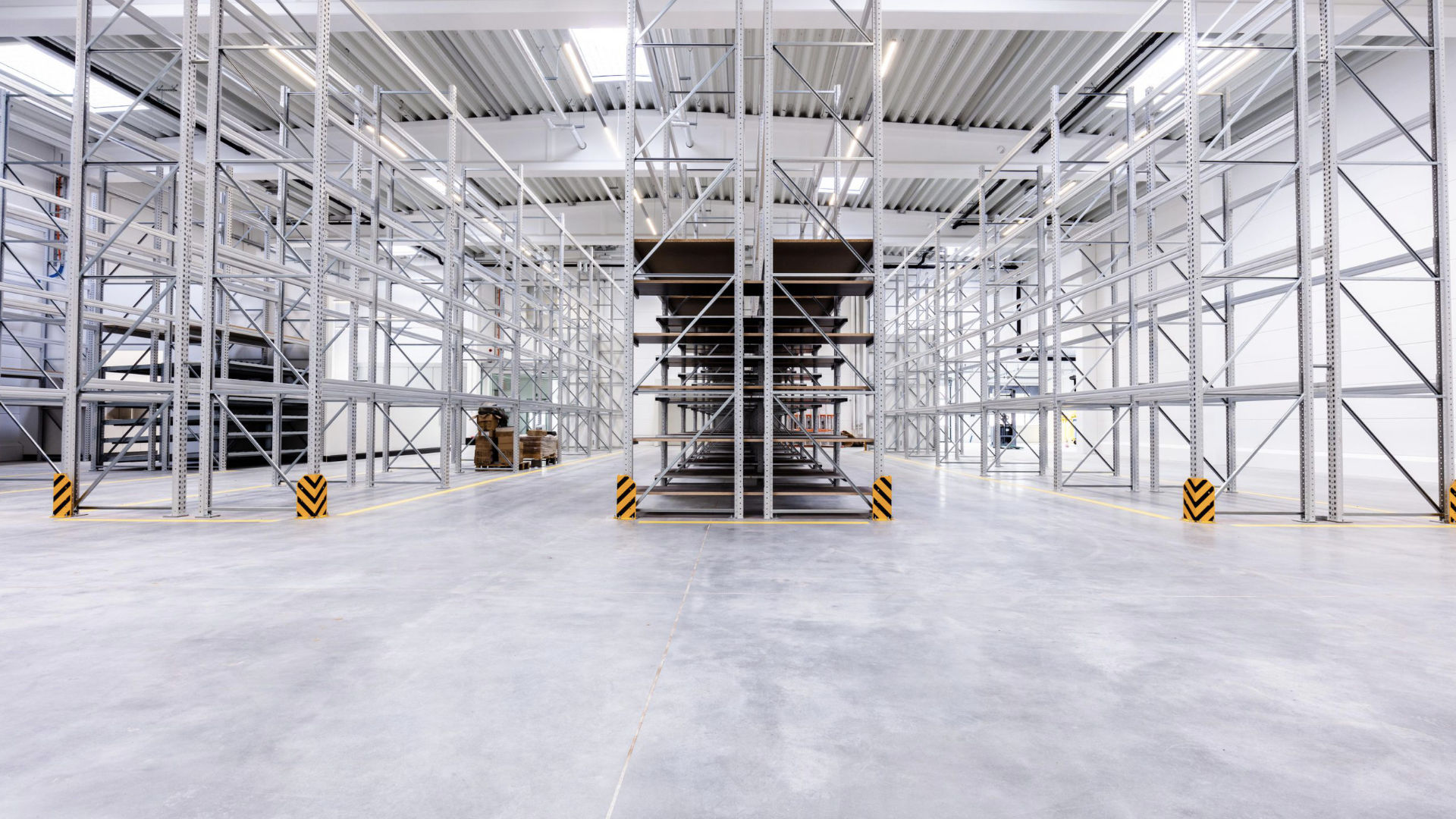
Within TR34 there are different types of floor specifications which are determined by typical floor use. Each will have different methods of application and can vary in flatness and levelness. Many floors will have mechanical handling equipment operating at height, complex racking systems and automation systems in place; all requiring high tolerance flat flooring.
There are often two types of warehouse floor categories: Free Movement (FM) and Defined Movement (DM).
FM stands for Free Movement and has the following categories:
FM1 - Requires very high levels of flatness and levelness – ‘Superflat floor’ with operational equipment working at highest levels.
FM2 – Requires high levels of flatness and levelness, MHE working at height.
FM3 – Requires moderate levels of flatness levelness, often in retail units.
FM4 – Where low levels of flatness are required, workshops or manufacturing facilities.
DM stands for Defined Movement which operates in a very narrow aisle (VNA) warehouse space:
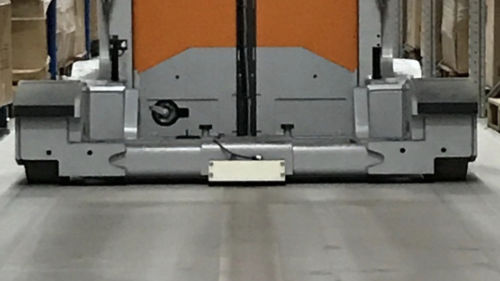
DM floors are in VNA areas where a defined path is in operation for specialist Mechanical Handling Equipment. The equipment will run along the pathway where there is high bay, high racking systems and where the floor needs to be of ultimate performance for safety, efficiency and durability.
VNA Forktrucks are specialist machines operating at height. A floor will be specified at 3 levels, requiring high levels of accuracy depending on the height and reach of the equipment: DM1, DM2 and DM3.
Using bespoke equipment, Floor Surveys Ltd specialises in surveying warehouse floors to both FM (Free Movement) and DM (Defined Movement) standards as set out by the Concrete Society TR34 4th Edition. This includes an in-house Property F Reader for FM surveys.
We also have purpose-built equipment which measures the flatness of a floor within a VNA Defined Movement (DM) area. This includes an in-house profilergraph.
Undertaking readings which measure concrete floors to sub millimetre precision, our specialist software provides customers with a full report categorising the final standards of finish.
We work with contractors, owners and operators of warehouses to measure, lay and fit floors to high standards and classifications for a multitude of reasons; here are a few examples:
✓ Knowledge
✓ Experience
✓ Equipment
Floor Surveying is a specialist area, and it's important customers find the right professionals to carry out the work.
Floor Surveys Ltd offers decades of knowledge within warehousing and industrial flooring. This is demonstrated in terms of understanding the end user, raw material expertise, knowledge of industry standards and an understanding of how to measure, assess and capture the right information using the correct equipment to analyse and report.
This proven experience is invaluable in terms of reliable advice around early identification of problems and best practice – saving clients time and money!